The Sipvexa Journal
From Bean to Cup: A Thoughtful Guide to Better Daily Coffee
Sipvexa Journal · The Ritual of Refreshment
Good coffee does not have to be complicated. It asks for a few thoughtful choices, a little consistency, and enough curiosity to notice what you enjoy. Whether your ideal cup is deep and comforting or bright and expressive, the journey from bean to cup offers many small opportunities to make a familiar ritual feel more personal.
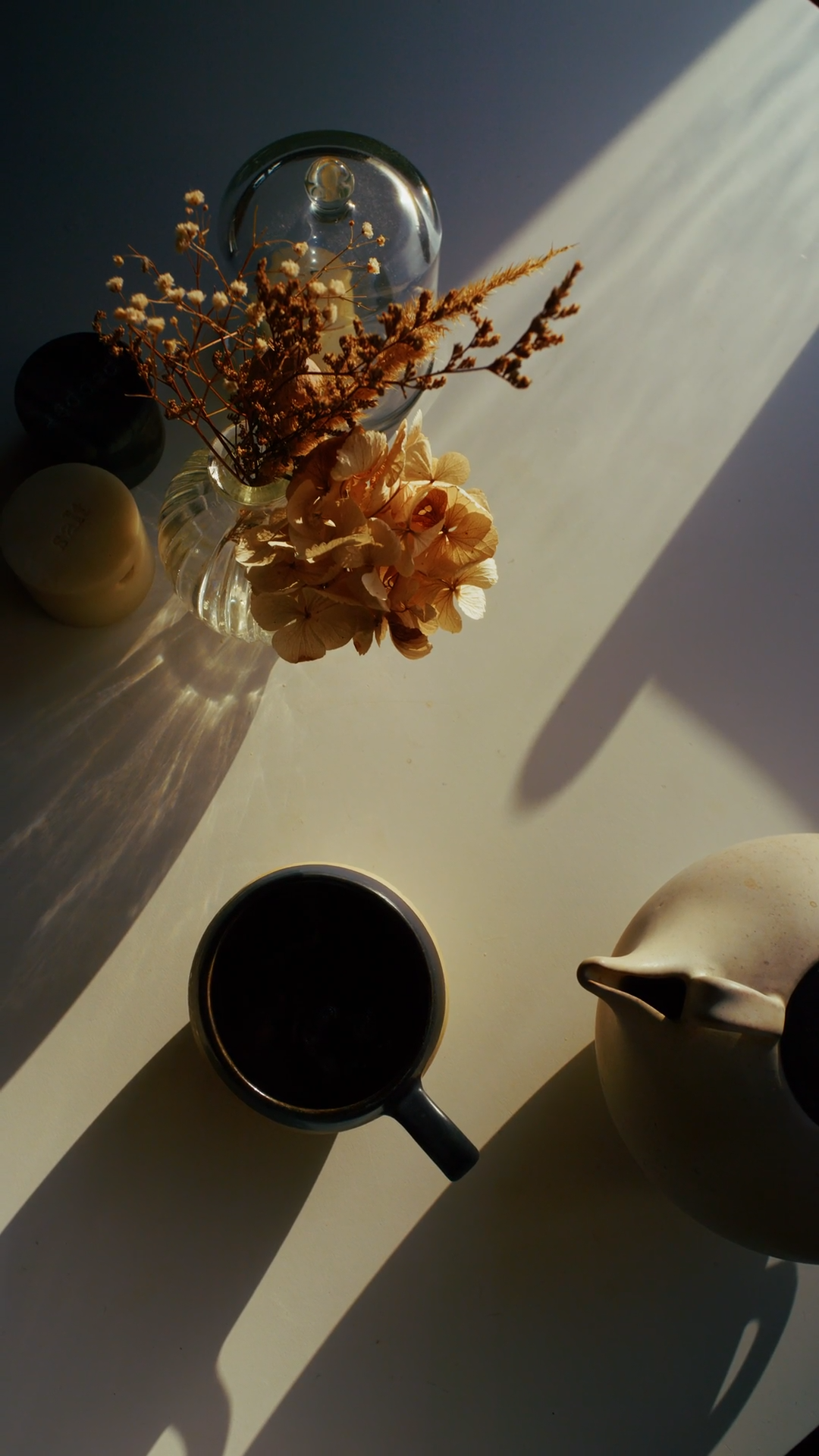
The scene that inspired this article—a dark cup of coffee, simple ceramics, warm dried flowers, and long afternoon shadows—captures that feeling perfectly. Nothing in it is rushed. The coffee is the centerpiece, but the atmosphere makes it memorable.
Begin with your own definition of good coffee
Descriptions such as strong, smooth, and bold are useful starting points, but they can mean different things to different drinkers. Try thinking about the flavors and textures you enjoy instead.
Do you prefer a cup with a rounded, chocolate-like finish? Something with pronounced toasted notes? A coffee that feels lively and fruit-forward? Or an easygoing blend that tastes satisfying with milk? Once you can describe what you like, browsing becomes simpler and more rewarding.
At Sipvexa, we encourage customers to explore coffee by preparation style as well as flavor. A coffee you love as a pour-over may behave differently as espresso. That does not make either result wrong—it simply means brewing changes the experience.
Whole bean or ground: which fits your routine?
Whole bean coffee gives you control over grind size and allows you to grind just before brewing. That is useful because different brewing methods need different grind textures. Espresso typically calls for a much finer grind than a French press, for example. Whole beans are an appealing choice if you enjoy experimenting and have a grinder you trust.
Ground coffee offers speed and convenience. It can be a practical choice for busy households, offices, or anyone who prefers a familiar preparation routine. Match the grind to your brewing device where possible and store the coffee carefully after opening.
Coffee pods and capsules simplify measuring and cleanup, although you must check compatibility with your machine. They are particularly convenient for consistent single servings.
Instant coffee is a different preparation category with its own strengths: speed, travel convenience, and the ability to make a cup without brewing equipment. Quality and flavor vary, so try options that suit your preferred style rather than dismissing the entire category.
The best format is the one you will enjoy using regularly.
Understand roast without getting lost in labels
Roasting transforms the green coffee bean and shapes the flavors we perceive. Lighter roasts may preserve more recognizable origin-driven acidity and floral or fruit-like character. Darker roasts tend to emphasize more pronounced roast flavors. Medium roasts can offer an inviting middle ground, but descriptions are not universal: one brand’s medium may be another’s dark.
Read tasting notes as suggestions, not promises that your cup will literally taste like a dessert. Water, grind size, brewing method, and personal perception all affect the final experience. A useful approach is to sample one coffee over several mornings before deciding whether it belongs in your regular rotation.
Match the method to the mood
Different methods create different textures and levels of involvement:
- Pour-over: A hands-on method that lets you control pouring and can highlight clarity and nuance.
- French press: A full-immersion approach associated with a rounded mouthfeel and straightforward preparation.
- Drip coffee maker: Reliable for households that want several cups with minimal active effort.
- Espresso machine: Produces concentrated coffee and opens the door to cappuccinos, lattes, and other milk drinks.
- Moka pot: Creates a strong stovetop coffee with a bold character distinct from machine espresso.
Start by following the manufacturer’s brewing guidance. Measure coffee and water consistently, use clean equipment, and change one variable at a time. A small scale can help, but the most important tool is still your own taste.
Fix the cup before replacing the coffee
If your cup tastes thin, it may need a different coffee-to-water ratio or a more suitable grind. If it tastes excessively harsh, review the water temperature, grind, and contact time. Stale coffee or a machine that needs cleaning can also affect flavor. Before buying new equipment, make sure the simple variables are working in your favor.
Your water matters too. Fresh, pleasant-tasting water provides a better starting point than water with an obvious unwanted odor or taste. If your coffee maker requires a particular water treatment or maintenance schedule, follow its instructions.
Store coffee like something worth enjoying
Coffee is sensitive to air, heat, moisture, and light. Keep it in an airtight container in a cool, dry cupboard rather than next to the stove or on a sunny windowsill. Buy quantities that suit your household’s consumption instead of choosing the largest bag by habit. Whenever possible, note when coffee was opened and how its flavor changes over time.
Avoid transferring coffee to decorative open bowls for long-term storage. They might look beautiful in a photograph, but exposure can diminish the very aroma you purchased the coffee to enjoy.
Create a personal tasting ritual
Try tasting a new coffee without milk or sweetener first, even if you later add them. Take a small sip as it cools; temperature can change how sweetness, acidity, and bitterness are perceived. Jot down three words: perhaps nutty, smooth, warm or bright, floral, light. Record how you prepared it. These notes can guide future choices far better than a generic ranking.
The setting matters as well. A warm mug, a cleared surface, and a few quiet minutes can turn practical preparation into an enjoyable rhythm. Add a book, fresh air, or your favorite morning playlist if that makes the moment feel like yours.
A final sip: Better daily coffee is not a competition for the most expensive beans or equipment. It is a relationship between taste, technique, and routine. Explore Sipvexa’s whole bean, ground, pod, and instant coffee selections with curiosity, and build a cup you are happy to come back to tomorrow.
Find your next favorite sip. Discover the world of tea, coffee, and thoughtfully chosen non-alcoholic beverages at Sipvexa.
Explore All Beverages